
By Marcus Jennings March 20, 2026
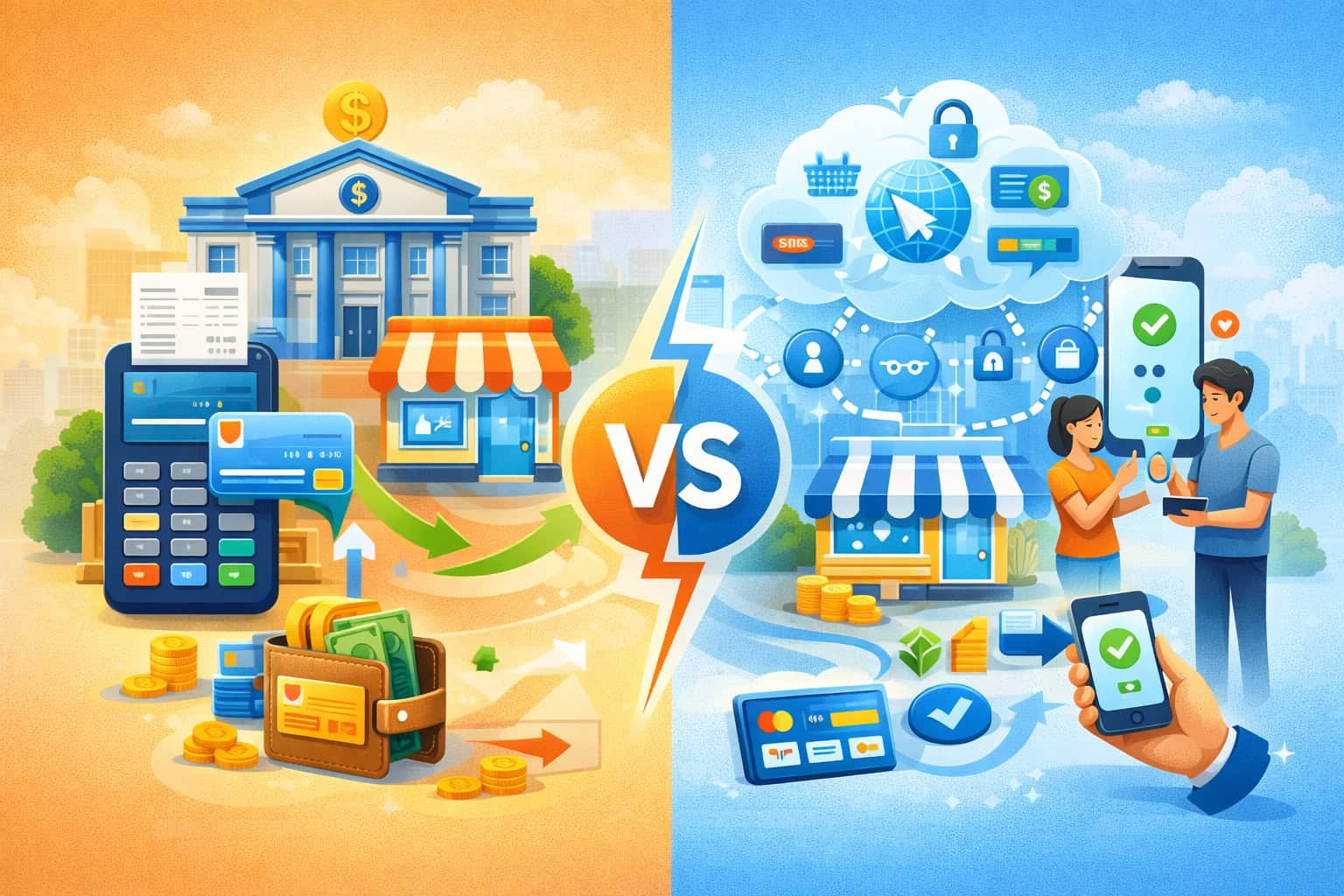
Choosing how your business accepts payments can shape cash flow, customer experience, risk exposure, and long-term growth. That is why the question of Merchant Account vs Payment Service Provider matters so much. On the surface, both options let you accept card and digital payments. Under the hood, though, they work very differently.
Many business owners start with a simple goal: get paid fast and keep checkout smooth. That often leads them toward a payment service provider because setup is quick and onboarding is easier.
Other businesses need more control, stronger account stability, and infrastructure built for scale. In those cases, a dedicated merchant account often makes more sense.
The challenge is that the wrong setup can create friction you do not see right away. A business may enjoy a fast launch with a PSP, then run into payout delays, higher payment processing fees, transaction holds, or limited support once sales volume increases.
Another business may apply for a dedicated merchant account too early and take on more complexity than it needs.
This guide breaks down the Difference Between Merchant Account and PSP in a practical way. You will learn how each model works, what happens behind the scenes, where the risks show up, how pricing and underwriting differ, and which option fits different business types. By the end, you should be able to choose the right payment setup with more confidence and fewer surprises.
What Does Merchant Account vs Payment Service Provider Mean?
When people compare a merchant account and a PSP, they are really comparing two different ways of accessing the payment system. Both can process customer payments, connect to card networks, and help businesses accept money online or in person.
The major difference is not whether payments go through. The major difference is whose account structure, risk rules, and processing relationship you are using.
A merchant account is usually a dedicated account set up specifically for your business. Your company goes through an underwriting process, the provider evaluates your model and risk profile, and once approved, you receive an account tied to your business. This structure tends to offer more control, more stability, and more tailored support.
A payment service provider works differently. Instead of giving each business its own fully underwritten merchant account at the start, the PSP payment model places many businesses under a larger shared structure.
This is often called aggregated payment processing. The PSP acts as a payment facilitator, bringing many merchants into one broader system and handling much of the infrastructure for them.
That is why Merchant Account vs PSP is not just a technical comparison. It is a business model comparison. One option emphasizes speed and simplicity. The other emphasizes ownership, customization, and long-term control.
For businesses exploring broader payment processing solutions, this distinction matters because it influences onboarding, reserves, funding timelines, chargeback response, and how easily your payment setup can scale as your operation grows.
A simple way to picture the difference
Think of a PSP like renting a furnished space in a large building. You can move in quickly, the basics are already there, and the provider handles much of the setup. That convenience is valuable, especially when speed matters. But you also live by the building’s rules, and if management sees a risk issue, your access can be restricted with little notice.
A dedicated merchant account is more like leasing your own commercial space. It takes more work upfront. There is more review before approval. But once you are in place, the setup is built around your business rather than around a shared pool of merchants.
This is the core of Payment Service Provider vs Merchant Account. One is shared and streamlined. The other is dedicated and customized.
That difference shows up in several important ways:
- How fast you can get started
- How much underwriting happens upfront
- How risk is monitored
- How account freezes and reserves are handled
- How flexible pricing can be
- How much support you receive when issues arise
A startup that needs fast merchant onboarding may love a PSP. A business with steady volume, more complex operations, or tighter risk concerns may prefer the predictability of a dedicated merchant account.
Why this comparison matters more as a business grows
Early-stage merchants often focus on setup speed because they need to launch, validate demand, and start taking payments quickly. That is a perfectly reasonable priority. But once the business starts growing, the weak points of a payment model become easier to spot.
For example, a business with larger tickets, recurring billing, seasonal spikes, or multi-channel sales may find that a shared PSP environment creates more scrutiny. In that setup, unusual activity can trigger reviews, transaction holds, rolling reserves, or slower payouts because the provider is managing risk across a broad merchant base.
A merchant account can be a better fit once payment operations become more important to daily business health. The approval process is more involved, but that can lead to stronger account stability, better alignment with your risk profile, and more room to negotiate pricing or configure your payment infrastructure around real business needs.
What Is a Merchant Account?

A merchant account is a specialized account that allows a business to accept card payments and move those funds through the payment ecosystem before settlement reaches the business bank account.
It is typically provided through an acquiring bank, processor, or merchant services provider that evaluates the business before approval.
The key idea is that the merchant account is built specifically for your company. Your business identity, processing history, industry type, sales methods, ticket sizes, and risk profile are all part of the setup. That makes the account more individualized than what you usually get with a PSP.
This dedicated approach affects much more than approval. It influences your pricing model, your payment risk management process, the level of support you receive, and how your account is treated when something changes in your transaction patterns.
For many established businesses, a dedicated merchant account feels like a more professional payment setup because it is designed around their operation rather than fitted into a one-size-fits-most system.
If your business needs stronger security and operational consistency, it also helps to understand the basics of secure payment processing systems, since the quality of your provider’s infrastructure matters just as much as the account type you choose.
How a dedicated merchant account works behind the scenes
When a customer pays with a card, the transaction travels through several participants.
The payment gateway or terminal captures the payment details, the processor routes the transaction, the card network passes information between institutions, and the acquiring side helps settle the payment into your merchant setup before funds are deposited into your bank account.
With a dedicated merchant account, your business sits directly within that acquiring relationship in a more formalized way. Before that happens, the provider usually reviews:
- Business model
- Ownership structure
- Processing history
- Average ticket size
- Monthly volume
- Fulfillment timing
- Refund policy
- Chargeback exposure
- Website or sales environment
- Financial health and documentation
This underwriting process is one reason merchant account approval takes longer than PSP onboarding. But it also explains why many businesses get greater long-term stability once approved. The provider has already examined the business instead of trying to assess risk only after transactions begin flowing.
That is an important distinction in Merchant Account vs PSP comparisons. A merchant account typically front-loads more reviews so the account can operate more predictably later.
Common benefits of a merchant account
The biggest merchant account benefits usually appear when a business needs more control. That might mean customized pricing, support for higher volume, multi-location processing, advanced fraud tools, better dispute workflows, or more flexibility in integrating systems.
Here are some advantages businesses often value:
- More account stability due to upfront underwriting
- Better fit for complex or higher-risk business models
- More transparent service structure in many cases
- Greater ability to customize payment infrastructure
- Potentially better pricing at scale
- Better support for in-store payment acceptance and online payment processing together
- Stronger long-term business payment scalability
A merchant account is not automatically better for every company. It requires more documentation, more setup effort, and sometimes more monthly commitments. But for a business that relies heavily on consistent payment performance, that extra effort can pay off.
What Is a Payment Service Provider (PSP)?

A payment service provider, or PSP, is a company that enables businesses to accept payments using a shared infrastructure.
Instead of opening a dedicated merchant account for each seller at the start, the PSP allows merchants to process under the provider’s larger umbrella system. This is why PSPs are often associated with speed, convenience, and low-friction setup.
For many businesses, the appeal is obvious. You can often sign up online, connect your website or app, and begin processing quickly.
You may get a payment gateway, fraud screening tools, dashboard reporting, and multiple payment methods in one package. That simplicity makes PSPs popular with startups, small online sellers, service businesses, and merchants that want a fast business payment setup.
In many cases, the PSP is operating as a payment facilitator. That means it brings sub-merchants into its system and manages the broader acquiring relationship on their behalf.
Instead of every business going through full traditional merchant underwriting at the beginning, the PSP handles onboarding more quickly and often performs deeper reviews later if transaction activity triggers concern.
This is one reason the PSP vs traditional processing decision can be tricky. The PSP model lowers the barrier to entry, but it also gives the provider broad authority to monitor and control account activity across a shared portfolio of merchants.
For readers who want a more focused overview of the model itself, Merchant Services also has a helpful article on what a payment service provider is and how it works.
How the PSP payment model works in practice
Under a PSP model, your business is usually one of many operating within an aggregated structure. From the customer’s perspective, checkout may feel seamless. From the merchant’s perspective, the dashboard may look polished and modern. But the underlying account ownership is different from a dedicated merchant account.
That shared structure creates some important advantages:
- Faster merchant onboarding
- Fewer application hurdles
- Easier integration for online payment processing
- Simple pricing for newer businesses
- One provider may bundle gateway, processing, reporting, and risk tools
It also creates trade-offs. Because the PSP is responsible for monitoring risk across many merchants, sudden changes in your sales pattern may trigger a review. A spike in volume, a rise in chargebacks, a high-value transaction, or an industry-related concern can lead to payout holds or account restrictions.
This is where people start to see the real difference between a Merchant Account and PSP. A PSP can be incredibly convenient, but the convenience comes with less individual control. Your account is part of a larger ecosystem, and the provider may make platform-level decisions quickly to protect itself.
Why PSPs are popular with newer merchants
The biggest strength of a PSP is accessibility. Businesses that want to start selling without a long underwriting process often find the PSP model ideal. This is especially true for merchants launching online, testing demand, or handling modest transaction volumes.
A new business may not have processing history, strong financial records, or extensive operational documentation. A PSP gives that merchant a path to accept payments without waiting through a traditional approval cycle. In some cases, that speed is the difference between launching now and delaying sales.
PSPs are also attractive because they often combine many tools in one place:
- Hosted checkout or payment links
- Shopping cart integration
- Invoicing options
- Mobile payments
- Simple reporting
- Basic dispute tools
- Quick access to online payment infrastructure
That does not mean PSPs are only for small merchants. Some larger businesses use them successfully too. The issue is not business size alone. The issue is whether the shared model matches your risk, volume, support, and stability needs.
Merchant Account vs Payment Service Provider: The Core Difference
When comparing Merchant Account vs Payment Service Provider, the simplest answer is this: a merchant account gives your business its own dedicated processing relationship, while a PSP places your business inside a shared payment ecosystem managed by the provider.
That single distinction affects nearly every part of payment operations. It shapes who owns the account structure, how risk is assessed, when underwriting happens, how much visibility you have into pricing, and what kind of support you get when there is a problem.
Businesses often assume the two options are just different brands offering the same outcome. They are not. A dedicated merchant account is usually built for long-term control and stability. A PSP is designed for fast access and broad usability.
This difference becomes especially important when you look beyond signup. It shows up in payout timing, reserve policies, account freezes, dispute handling, and how your business is treated when transaction behavior changes.
A merchant processing a stable stream of low-risk payments may never feel much friction with a PSP. But a merchant with subscription billing, large tickets, busy sales spikes, or a more sensitive industry profile may feel those differences very quickly.
The decision is not about which option is universally better. It is about which structure fits your business stage, risk profile, and growth plan.
Dedicated vs aggregated account structure
The most important behind-the-scenes difference is the account structure itself. A merchant account is dedicated to your business. That means the provider evaluates your company during onboarding and approves you as an individual merchant.
A PSP uses aggregated payment processing. Multiple merchants operate under the PSP’s broader master framework. You are typically onboarded faster because the provider is not doing the same level of upfront underwriting for every seller at the start.
This affects how risk is handled. In a dedicated setup, the provider already has a clearer picture of your business and may be better positioned to handle expected behavior. In an aggregated setup, the PSP may respond faster and more broadly to anything it considers risky because it is protecting the entire platform.
That is why Merchant Account vs PSP is not only about convenience. It is about where your business sits in the risk chain.
Ownership, control, and operational flexibility
Control is another major dividing line in Payment Service Provider vs Merchant Account decisions. With a dedicated merchant account, businesses often have more room to shape their payment setup. That may include pricing arrangements, terminal choices, gateway integrations, fraud settings, support flows, and multi-channel configurations.
A PSP usually provides a more packaged experience. That is useful for fast deployment, but it can also mean less flexibility. The provider decides more of the framework, and merchants operate inside those boundaries.
For some businesses, that is perfectly fine. For others, especially those with custom checkout needs, multiple selling channels, or advanced operational requirements, that packaged approach can become limiting.
A good example is a merchant that sells online, accepts recurring payments, invoices clients, and also takes in-person payments. A PSP may support all of that, but not always with the same depth or configurability a dedicated merchant services solution can provide.
How Underwriting and Approval Differ

One of the clearest differences between the two models is how approval happens. The underwriting process is often the dividing line between quick access and long-term account stability.
A merchant account usually requires fuller upfront review. The provider may ask for business formation documents, banking details, processing statements, product information, refund and fulfillment policies, and a clear picture of how your business operates. This can feel slower, but it is part of what makes the account more tailored and often more stable later.
A PSP typically simplifies merchant onboarding by reducing friction at the beginning. You may be able to sign up with limited documentation and start processing quickly. That speed is valuable, especially for new businesses.
But it also means the provider may continue evaluating your activity after you begin processing. In other words, some risk review shifts from the front end to the back end.
This is why many businesses are surprised when they compare the onboarding experience to the account stability that follows. Fast approval does not always mean fewer problems later. It may simply mean the review is happening in a different order.
Merchant account approval is slower but more deliberate
With a traditional merchant account, underwriting is part of the setup process rather than an afterthought. The provider wants to understand the nature of your business before assigning a dedicated account. This can include a review of your website, billing descriptors, product categories, customer delivery expectations, and chargeback history.
That process can feel demanding, but it has real advantages. If your provider understands your business upfront, it is less likely to be surprised later by patterns that should have been expected all along. That can reduce the chance of avoidable account interruptions.
Merchant account approval is especially useful for businesses with:
- Higher average tickets
- Subscription or recurring revenue
- Longer fulfillment timelines
- Multiple sales channels
- Prior processing volume
- Risk patterns that need explanation
- Industry models that are not well suited to blanket rules
A thorough approval process does not guarantee a perfect relationship, but it often gives you a stronger foundation. That matters when payments are mission-critical.
PSP onboarding is fast, but reviews can happen later
The PSP advantage is speed. A business can often create an account, connect a checkout flow, and start accepting payments with minimal delay. For merchants who need to launch quickly, that is a major benefit.
But fast onboarding does not mean no underwriting. It often means lighter initial checks followed by ongoing risk monitoring. If your business shows unexpected behavior later, the PSP may pause payouts, request documents, create reserves, or restrict processing until it is comfortable with the risk.
Common triggers for later review can include:
- Sudden volume spikes
- Large transactions
- Rising chargeback rates
- Unusual refund activity
- Industry concerns
- Changes in sales method
- Suspicious geographic or behavioral patterns
This does not make the PSP model bad. It just means merchants need to understand the trade-off. Easy entry may come with less predictable account treatment if the provider flags activity after processing begins.
Fees, Pricing Models, and the True Cost of Processing
Many businesses begin the comparison by looking at payment processing fees, and that is understandable. Cost matters. But one of the biggest mistakes merchants make is comparing only the visible transaction rate without looking at the full pricing model, the business stage, and the likelihood of hidden costs through holds, reserves, or inefficiencies.
PSPs often market simple pricing. That simplicity is appealing because it makes budgeting easier at the start. You usually know what you will pay per transaction, and there may be fewer obvious line items. For newer merchants, that clarity can be helpful.
Merchant accounts often have more customized pricing structures. Depending on the provider, you may see different fees for different card types, account services, gateways, chargeback handling, compliance, or hardware.
That can feel more complex, but complexity is not always bad. It may reflect a pricing model that can become more cost-effective as volume grows.
The real question is not just “Which is cheaper?” The real question is “Which pricing model fits how my business actually processes payments?”
PSP pricing is simple, but not always cheapest
The PSP model is often built around flat-rate pricing. That makes it easy to understand and quick to compare. If you are processing lower volume or just getting started, flat-rate pricing may be perfectly reasonable.
The trade-off is that simplicity can become expensive as your business scales. If your volume rises, average ticket grows, or payment mix changes, a flat rate may cost more than a more tailored merchant account arrangement.
PSP pricing can also become more expensive indirectly through:
- Chargeback fees
- Currency or payment method add-ons
- Payout acceleration fees
- Reserve requirements
- Lost revenue from sudden account restrictions
For some merchants, those secondary costs matter more than the headline rate. A provider that looks inexpensive on paper may become costly if it creates instability around cash flow.
Merchant account pricing can be more flexible over time
A dedicated merchant account often allows more room for customized pricing, especially once the provider understands your business profile. High-volume or stable businesses may be able to secure more favorable terms than what a flat-rate PSP model offers.
That does not mean merchant accounts are always less expensive. Some providers have monthly minimums, gateway fees, statement fees, or hardware costs. But the structure can be more aligned to your actual processing reality, particularly for businesses with predictable volume and lower operational risk.
This can make a merchant account attractive for merchants who want to optimize:
- Total processing cost
- Channel-specific pricing
- Hardware and software integration
- Chargeback response structure
- Long-term profitability
Payout Timing, Holds, Rolling Reserves, and Cash Flow Risk
Cash flow is where payment model differences become painfully real. A checkout may look successful, but what matters to your business is when funds actually arrive and whether they stay accessible.
This is one of the most important parts of the Difference Between Merchant Account and PSP because payout timing affects payroll, inventory, ad spend, vendor payments, and overall confidence in the business.
Both merchant accounts and PSPs can deliver smooth funding under normal conditions. The issue appears when a provider perceives risk. That is when transaction holds, delayed payouts, rolling reserves, or account freezes can appear.
Businesses often do not pay enough attention to these risks during signup because everything feels fine until it is not.
A PSP account can be very efficient for normal day-to-day payments. But because the provider manages a shared risk pool, it may take quick protective action when your account behavior changes.
A dedicated merchant account can also impose reserves or review activity, but it often has more context about your business because of the upfront underwriting.
Why PSP account stability can feel less predictable
PSP account stability is one of the most common concerns businesses raise after they outgrow the early startup stage. Because the PSP is managing aggregated payment processing, it often relies on centralized risk systems that look for patterns across all merchants.
That means your business may trigger action even if you believe your transactions are legitimate and explainable. A sudden promotion, viral sales spike, change in product mix, or a run of higher-value orders may look risky in an automated system.
Potential outcomes include:
- Delayed payouts
- Requests for additional documents
- Temporary transaction holds
- Rolling reserves
- Limits on certain payment types
- Account suspension or termination
This is not unique to any one provider. It is part of how the model works. Shared systems often favor broad protective actions.
How merchant accounts approach reserve and funding risk
Merchant accounts are not immune to risk controls. Providers may still impose rolling reserves, especially for businesses with chargeback exposure or long fulfillment windows. They may still monitor unusual volume or request updated documents.
The difference is often in context and relationship. Because underwriting happened upfront, the provider may already know your expected sales profile, operational model, and historical risk pattern. That can lead to more measured responses.
Businesses that rely on dependable funding often prefer this model because cash flow disruption can be more damaging than slightly slower onboarding. If payment delays would immediately affect operations, the stability of a dedicated merchant setup becomes a serious advantage.
If you are planning a future processor change, it is worth reviewing practical migration guidance like switching payment providers without disrupting sales so you can reduce downtime and funding friction.
Chargebacks, Compliance, and Payment Risk Management
Risk does not end once a payment is approved. Chargebacks, compliance obligations, fraud attempts, refund disputes, and operational errors all affect your payment relationship over time.
That is why payment risk management should be part of the Merchant Account vs Payment Service Provider conversation from the beginning, not just after a problem shows up.
Many merchants underestimate how closely providers watch dispute ratios and suspicious transaction patterns. A few chargebacks may seem manageable from the merchant side, but to a processor, they can signal brand risk, network scrutiny, or financial exposure.
The same is true for inconsistent billing descriptors, unclear fulfillment expectations, weak customer service, and poor fraud controls.
A dedicated merchant account and a PSP both care about these issues. The difference is in how they assess and respond to them. A merchant account provider may work more directly with you because the relationship is individualized. A PSP may act more quickly based on platform-wide risk policies and standard thresholds.
Chargeback management in a dedicated merchant account
With a merchant account, chargeback management is often more structured and more collaborative. You may have a clearer dispute workflow, stronger support, and better insight into what your provider expects.
Because the account is tied directly to your business, there may be more room to explain context, improve controls, and build a more sustainable risk profile.
This matters for businesses with:
- Recurring billing
- Delayed fulfillment
- Custom orders
- Larger average tickets
- Service-based transactions
- Multi-step customer journeys
A strong merchant services partner can help you reduce dispute risk through clearer billing descriptors, better refund communication, stronger fraud filters, and better document collection. That kind of support is valuable because preventing chargebacks is easier than winning them later.
PSP risk controls are often broader and faster
PSPs usually offer dispute tools, basic fraud screening, and alerts. For many merchants, that is enough. But the system is often designed for scale, which means rules may be broader and less tailored to the nuances of your business.
If a PSP sees your account as too risky, it may take action quickly. That could mean limiting volume, delaying payouts, or closing the account rather than working through a longer consultative process. Again, this is not necessarily unfair. It is often a reflection of the provider’s responsibility to protect the entire aggregated portfolio.
Businesses that sell online should also understand the security side of the equation. A strong checkout and gateway setup can reduce both fraud risk and customer hesitation. Resources like payment gateway security features can help merchants think more strategically about prevention rather than reaction.
Which Option Is Best for Different Business Types?
There is no universal winner in Merchant Account vs PSP. The right answer depends on your business model, risk profile, growth stage, sales channels, and how essential payment stability is to your daily operations.
A small service business sending invoices may not need the complexity of a dedicated merchant account right away. An eCommerce brand scaling aggressively through ads may need stronger account stability sooner than expected.
A subscription-based business may start with a PSP, then switch to a merchant account once recurring billing volume and chargeback sensitivity increase.
That is why a business should not choose based on popularity alone. It should be chosen based on fit.
Startups, solo operators, and simple business models
PSPs often work well for businesses that need to launch quickly and keep setup friction low. This includes:
- Early-stage eCommerce stores
- Freelancers and consultants
- Small service businesses
- Businesses testing a new offer
- Merchants with lower transaction volume
- Sellers with short fulfillment cycles
These businesses often benefit from fast merchant onboarding, simple flat-rate pricing, built-in checkout tools, and low operational overhead. If the payment setup needs to work right away and volume is still modest, a PSP can be a very sensible choice.
The key is to go in with open eyes. Speed is the advantage. But merchants should still review risk policies, prohibited business categories, reserve rules, and support quality before making the decision.
Established, growing, or more complex merchants
A dedicated merchant account often becomes more attractive when the business is larger, more specialized, or more dependent on consistent processing performance. This can include:
- Multi-channel retailers
- Subscription businesses
- Businesses with larger average tickets
- Companies with recurring billing
- Merchants with higher monthly volume
- Businesses needing custom integrations
- Operations that cannot tolerate processor account freezes
Retailers also need to think about physical acceptance. If your business relies on terminals, POS systems, and in-person transaction flow, the broader setup matters. Merchant Services offers practical resources on how to set up a credit card terminal for merchants planning physical payment acceptance as part of a broader payment strategy.
In many of these scenarios, the value of a dedicated merchant account is not just lower cost. It is stability, support, and room to build a payment system that matches business complexity.
Real-World Examples: eCommerce, Retail, Services, Subscription, and Multi-Channel
Theory is useful, but payment decisions become easier when you look at real business scenarios. The Payment Service Provider vs Merchant Account choice often becomes obvious once you match it to how a company actually sells.
eCommerce and direct-to-consumer businesses
A new online store with modest order volume may do very well with a PSP. It can get checkout live quickly, connect to the shopping cart, and start collecting payments without a long approval process. That matters when the business is trying to validate products and move quickly.
But as the store grows, the risk picture changes. Ad-driven growth can create sudden volume spikes. Product launches can look unusual. Refund activity may rise during promotions. If the provider flags that behavior, the merchant may face payout disruption at exactly the wrong time.
An established eCommerce business with predictable volume, more complex fraud concerns, or high ad spend often benefits from a dedicated merchant account because stability matters as much as conversion.
Retail stores and in-person sellers
Physical retail businesses often need dependable terminal performance, staff-friendly systems, and strong day-to-day support. A PSP can work, especially for smaller or mobile sellers.
But retailers with steady foot traffic, higher average sales, or multiple locations often prefer a dedicated merchant setup tied to broader merchant services.
In-store payment acceptance is not just about card acceptance. It is also about batch timing, terminal support, chargeback evidence, hardware reliability, and how easily the payment system connects with inventory or point-of-sale tools.
Service businesses and invoice-based merchants
Consultants, agencies, repair businesses, coaches, and appointment-driven companies often like PSPs because payment links and invoicing tools are built in. That simplicity is useful when payment collection is not highly technical.
But service businesses with larger invoices or delayed delivery should be careful. Providers may view those models as riskier because there is more time between payment and fulfillment. In that case, a merchant account may provide more stable processing once volume grows.
Subscription and recurring billing models
Recurring billing deserves special attention because it can trigger disputes more easily when communication is weak. Businesses with memberships, retainers, software billing, or repeat order programs need strong billing clarity and careful chargeback management.
A PSP may be fine for a smaller subscription business at launch. But if recurring billing becomes a major revenue stream, a dedicated merchant account often provides stronger long-term support.
For merchants building subscription revenue, it helps to understand the mechanics of recurring payment processing so billing consistency, dispute prevention, and revenue continuity stay aligned.
Multi-channel businesses
A business that sells online, in store, through invoices, and via recurring billing has more moving parts than a business with one simple channel. This is where a dedicated merchant account often shines. Business payment scalability becomes more important, and the value of a unified payment infrastructure increases.
A PSP may still be possible, but merchants with multi-channel complexity often outgrow one-size-fits-most systems faster than they expect.
Merchant Account vs PSP Comparison Table
A side-by-side view can make the Difference Between Merchant Account and PSP easier to understand. The table below summarizes the most important distinctions.
| Feature | Merchant Account | Payment Service Provider (PSP) |
| Account structure | Dedicated merchant account for your business | Shared or aggregated processing structure |
| Onboarding speed | Slower, more documentation required | Faster, simpler signup |
| Underwriting | More upfront underwriting | Lighter initial review, ongoing monitoring |
| Pricing | Often customizable | Often flat-rate and standardized |
| Control | Higher control over setup and processing relationship | Less control inside provider framework |
| Account stability | Often stronger once approved | Can be more sensitive to platform risk rules |
| Risk response | More individualized in many cases | Often broader and faster |
| Payout timing | Can be stable and predictable | Can be smooth, but more vulnerable to holds |
| Reserves and holds | Possible, but often based on known risk profile | Can appear suddenly if activity is flagged |
| Support | Often more consultative | Often more self-service or standardized |
| Scalability | Strong for growing and complex businesses | Good for fast launch, may become limiting |
| Best fit | Established, growing, or specialized merchants | Startups, simple models, lower-volume merchants |
This comparison does not mean a PSP is a weak option. In many cases, it is the right first step. The main takeaway is that the model matters. A business should choose the structure that matches its risk, cash flow needs, and growth path.
Common Mistakes Businesses Make When Choosing
Businesses often regret payment choices not because the provider was terrible, but because they chose based on the wrong criteria. The Merchant Account vs PSP decision is easy to oversimplify, especially when a fast signup page or attractive rate grabs attention.
One common mistake is choosing only on setup speed. A business sees that a PSP can get it live quickly and assumes that is the best solution. Sometimes it is. But if the business model includes larger tickets, recurring revenue, multi-channel sales, or higher dispute exposure, speed alone is not enough.
Another mistake is focusing only on the headline processing rate. A flat rate may look competitive until volume rises, refunds increase, or account holds interrupt cash flow. The visible fee is only one part of the real cost of processing.
Some merchants also fail to plan for growth. They choose a provider that works for the first stage of the business but creates friction later. By the time they realize it, switching becomes urgent rather than strategic.
Mistake one: ignoring risk profile and fulfillment model
Providers care deeply about when and how customers receive value. If you sell custom goods, future-dated services, recurring subscriptions, or large-ticket offers, your business may carry more payment risk than you think.
Merchants sometimes assume they are “low risk” because they are honest businesses with happy customers. Providers define risk differently. They look at disputes, refund timing, delivery gaps, fraud exposure, and operational predictability.
A provider mismatch can lead to:
- Unexpected reserve requirements
- Processor account freezes
- Long review cycles
- Cash flow strain during growth
- Sudden account closure
This is why underwriting fit matters so much.
Mistake two: not asking the right operational questions
Before committing, merchants should ask practical questions such as:
- How are chargebacks handled?
- What events can trigger a reserve?
- What support is available during payout delays?
- Can the provider support online and in-store acceptance?
- What happens if volume doubles?
- How does recurring billing affect risk review?
- Are there monthly commitments or hidden fees?
- How easy is it to migrate later?
Businesses that skip these questions often discover the answers only after a problem begins.
A Decision-Making Checklist for Choosing the Right Payment Model
If you are still weighing Merchant Account vs Payment Service Provider, a simple checklist can help you move from theory to decision. The right choice becomes clearer when you evaluate your business honestly against the way each model works.
Start with the business stage. If you are launching quickly, testing demand, or processing modest volume, a PSP may be enough. If payments are central to operations, cash flow is sensitive, and volume is growing, a dedicated merchant account may be the safer long-term move.
Then think about your sales pattern. Are transactions steady or spiky? Do customers pay once or on a recurring basis? Are you selling online, in person, or both? Are fulfillment timelines immediate or delayed? These details matter because providers price and manage risk based on behavior, not just business size.
Checklist: signs a PSP may be the right fit
A PSP may be a strong fit if most of the following are true:
- You need to start processing quickly
- Your business is still early stage
- Monthly volume is modest
- Average ticket size is relatively low
- Your sales model is straightforward
- You want bundled tools and simple setup
- You do not yet need deep customization
- You can tolerate some platform-level rules
This model is especially practical when speed and simplicity are more valuable than advanced control.
Checklist: signs a merchant account may be the better fit
A dedicated merchant account may be the stronger option if many of these apply:
- Payment stability is mission-critical
- Your volume is growing or already significant
- You have recurring billing or subscription revenue
- Your average ticket is larger
- You need customized support or integration
- You want more pricing flexibility
- You sell across multiple channels
- You want a payment setup built around your business
- You are concerned about sudden holds or account freezes
If several of these sound like your business, it may be time to move beyond a one-size-fits-most PSP structure and toward a more stable merchant services relationship.
Frequently Asked Questions
Common questions about Merchant Account vs Payment Service Provider
Is a PSP the same as a merchant account?
No. A payment service provider and a merchant account both help businesses accept payments, but they are structured differently. A PSP usually uses an aggregated model where many merchants process under a shared framework, while a merchant account is typically dedicated to one business and is usually more fully underwritten upfront.
Which is better: Merchant Account vs PSP?
Neither option is automatically better for every business. A PSP is often better for speed, simplicity, and getting started quickly. A merchant account is often better for control, stability, customization, and long-term scalability.
Why do PSPs onboard merchants faster?
PSPs usually reduce friction by using a lighter initial review process and shared infrastructure. That helps businesses start processing sooner. The trade-off is that deeper risk review may happen later if transaction behavior triggers concern.
Are merchant accounts more stable than PSPs?
They often are, especially after approval. Because the provider underwrites the business upfront, it may have more context and more confidence in the account. That can reduce the chance of sudden disruption, though no payment setup is completely risk-free.
Can a PSP hold funds or freeze an account?
Yes. If the provider detects unusual activity, high chargeback risk, sudden volume changes, or other concerns, it may delay payouts, impose reserves, or restrict the account. This is one reason businesses with sensitive cash flow often consider moving to a dedicated merchant account.
Do merchant accounts always cost less than PSPs?
Not always. The answer depends on transaction volume, pricing structure, business model, and provider terms. PSPs may be cost-effective for smaller or early-stage merchants, while merchant accounts may become more economical and flexible as volume grows.
Is a merchant account better for recurring billing?
It often can be, especially for businesses with meaningful subscription volume. Recurring billing increases the importance of chargeback management, billing clarity, and account stability. A dedicated merchant account may offer stronger long-term support for that type of revenue model.
Can a retail business use a PSP?
Yes. A small retail business can use a PSP, especially if speed and simplicity matter most. But larger retailers, multi-location stores, or merchants needing stronger hardware and support may prefer a dedicated merchant account setup.
When should a business switch from a PSP to a merchant account?
A business should consider switching when payment volume grows, risk complexity increases, recurring revenue expands, cash flow becomes more sensitive, or the current setup starts creating limitations. Many merchants use a PSP as a launch tool and later move to a dedicated account.
Conclusion
The real answer to Merchant Account vs Payment Service Provider comes down to business fit. A PSP gives you speed, convenience, and an easy entry point into online payment processing and modern checkout tools. A merchant account gives you a more dedicated relationship, greater control, and often stronger long-term stability.
If your business is new, relatively simple, and focused on launching quickly, a PSP may be the right starting point. If your business is growing, handling more volume, managing recurring billing, or depending heavily on predictable payouts, a dedicated merchant account may be the better foundation.
The smartest choice is not the one with the fastest signup page or the shortest sales pitch. It is the one that aligns with your risk profile, payment flow, customer experience, and growth strategy.
In the end, the difference between a Merchant Account and PSP is really the difference between borrowing convenience and building infrastructure. Both models have value. The key is choosing the one that supports your business not just at checkout, but through scale, disputes, risk events, and the daily reality of getting paid reliably.